Integrating Rhythms
Nature-, body- , inner- and clock- time offer rhythms that are shared and structure social life. Rhythms cannot, not integrate. This is called entrainment. During several centuries human kind developed a conscious integration of rhythms, inventing work hours, school hours, lunch breaks, agendas, holidays and more. Systems-time is challenging the integration of rhythms, since it does not seem to have a rhythm of it self. Human beings, through a methodology of trial and error, find solutions to integrate different rhythms they are confronted with. Different kinds of time merge necessarily in personal, social and collective experience of time. When working in distributed teams using technology to comunicate and collaborate, organizing a shared rhythm is crucial for keeping communication and business processes in flow. Simple things, like one well structured meeting online a week, generates trust and well being for all involved. When working in different time zones adaptation to others, at the expense of personal time, has to be taken into account. In small businesses people benefit from the fact that distributed work on a day-to-day basis facilitates personal life styles for those involved. Finding the ultimate rhythm between people’s personal time given the work that has to be done, is crucial for success.
-
Article
Periodicity, synchrony, and entrainment
It is becoming evident from these various studies that periodicity, synchrony, and entrainment…
-
Article
Interpersonal synchrony
The analysis of synchrony and rhythm in interpersonal communication and human cognition is a…
-
Article
The internal pulse
From the domain of music and neuroscience, Grahn (2009) provides a comprehensive review of the…
-
Article
Voice and synchrony
There is growing research on understanding how our bodies move with voice and how voices move with…
-
Article
Flow: synchrony and kinesics
We may notice another person in a group when they are not in sync with everything else. In a study…
-
Article
Well-being: intra- and interpersonal synchrony
William Condon proposed that being able to entrain in time with another person facilitates physical…
-
Article
Timing and meaning
In music, timing is very important. If you get the rhythm right, the tune will be recognizable as…
-
Article
Phase and period error correction
Error correction is a process that is linked to the cognitivist view of timekeeping that involves…
-
Article
‘Pulse’ in music and language
In this paper, we are focusing on an analysis of time in social interaction and musical interaction…
-
Article
Patterns of synchrony and rhythm
The interest in relating prosody (the patterns of vocalization) to body movement arose from the…
-
Article
Mutual manifestation and mutual adaptation
The role of rhythm in facilitating sense-making in human communication lies in prior research…
-
Article
How important is presence?
How important is presence? Is it slowly losing importance in work-life contexts? Or is workplace…
-
Article
Presence in knowledge-sharing practices
These observations regarding mediated interaction can be related to the concept of dialogism that…
-
Article
Mediated interaction
In effect, what they stress is that face-to-face interaction is only one amongst a variety of…
-
Article
New meanings
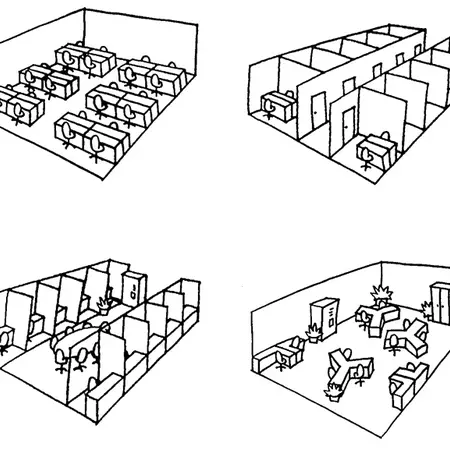
The concepts of working and meeting have quite recently acquired new meanings in the sense that we…
-
Article
The potential of presence design
A comment on my intertwined role as designer and researcher is in place. As designers, my…